ISRO's Gaganyaan Mission Nears Launch: India Prepares for First Crewed Spaceflight
N
NewsPews AI
1 min readVerified by Sobiya
Source: Photo by Dirk Schuneman on Pexels
Key Takeaway
India's ISRO is finalizing preparations for the Gaganyaan mission, set to launch its first crewed spaceflight by end-2026, marking a historic leap in the nation's space technology ambitions.
India's ISRO is finalizing preparations for the Gaganyaan mission, set to launch its first crewed spaceflight by end-2026, marking a historic leap in the nation's space technology ambitions.
Bengaluru, July 24, 2026 — India’s space agency ISRO is in the final stages of preparing for the Gaganyaan mission, which will send Indian astronauts into space for the first time by the end of 2026, according to official statements released this week.
The Gaganyaan mission, announced by Prime Minister Narendra Modi in 2018, aims to demonstrate India’s capability to send humans into low-Earth orbit and safely return them to Earth. This milestone is set to position India as the fourth nation, after the US, Russia, and China, to achieve independent human spaceflight.
Source: Photo by Лия Маргиналова on Pexels
Background: Years in the Making
ISRO’s Gaganyaan program has been in development for over eight years, with multiple unmanned test flights and critical technology demonstrations completed since 2019. According to The Hindu, the mission has received a budget of over ₹10,000 crore (approximately $1.2 billion USD).
ISRO successfully tested the Crew Escape System in October 2023 and completed the Gaganyaan Test Vehicle Abort Mission-1 (TV-D1) in 2024, both crucial for astronaut safety. These tests ensured that the crew module could be safely separated from the rocket in case of emergency, as reported by The Economic Times.
Key Details: The Mission Profile
The first crewed Gaganyaan flight will carry a crew of two to three Indian Air Force pilots, selected and trained in collaboration with Russia’s Roscosmos, into a low-Earth orbit of about 400 kilometers above the surface. The mission duration is expected to be three days.
The GSLV Mk III, ISRO’s most powerful launch vehicle, will be used to propel the Gaganyaan crew module. According to ISRO’s official updates, the crew module has undergone extensive environmental and vibration testing at ISRO’s Bengaluru and Sriharikota facilities.
International Collaboration and Training
ISRO has partnered with several international agencies for astronaut training, life support systems, and mission design. Four Indian Air Force pilots underwent basic astronaut training at Russia’s Gagarin Cosmonaut Training Center in 2021, followed by advanced training in India, The Indian Express reports.
NASA and ESA have also provided technical inputs on crew safety, environmental control, and life support systems. ISRO’s collaboration with France’s CNES has led to the development of advanced space medicine protocols for the astronauts.
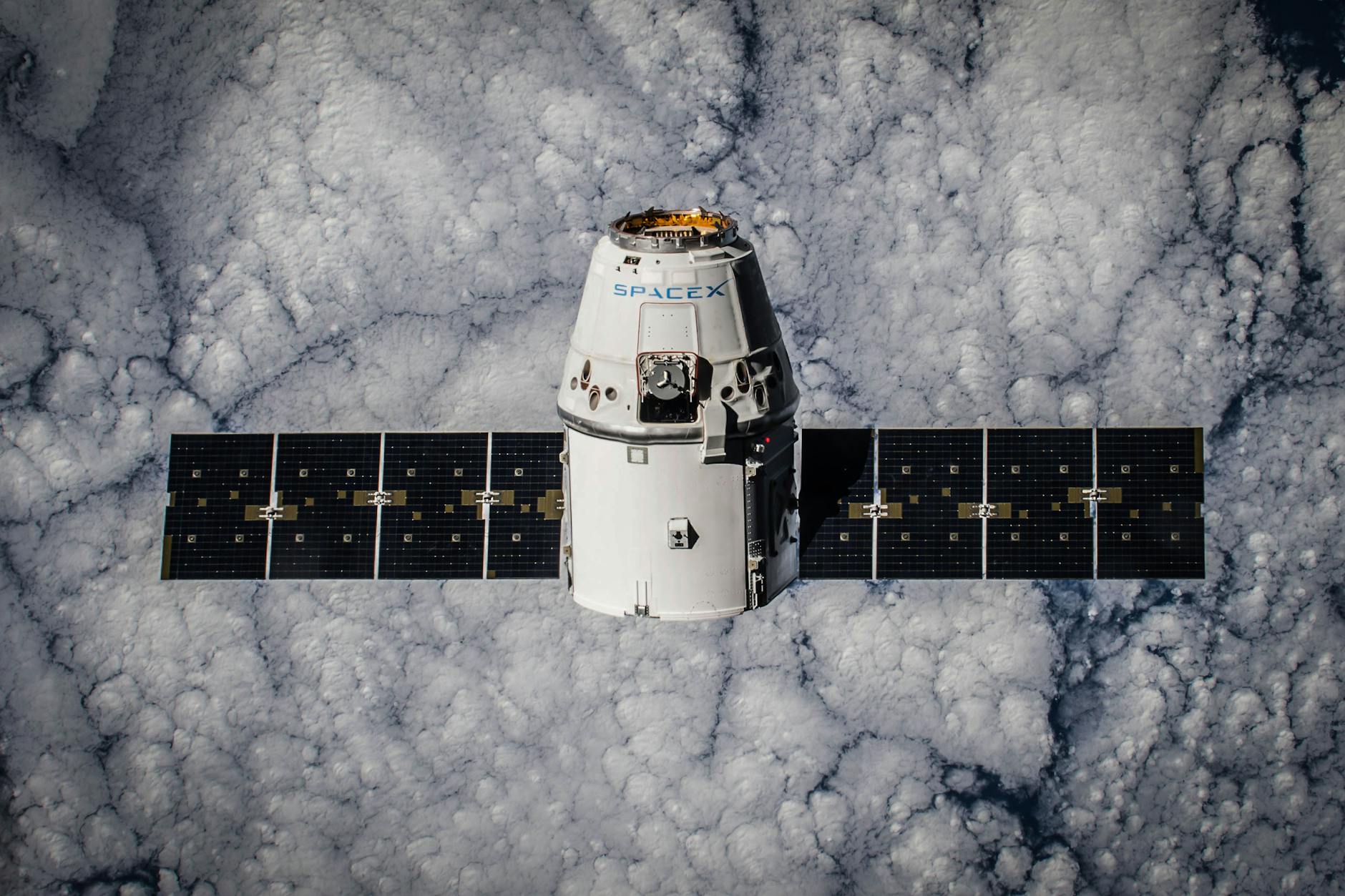
Source: Photo by SpaceX on Pexels
Technological Innovations
The Gaganyaan mission features several indigenous technologies, including a new crew module, an environmental control and life support system (ECLSS), and a human-rated launch vehicle. According to ISRO, over 500 Indian companies have contributed components and subsystems for the mission.
A key innovation is the crew module’s heat shield, designed to withstand re-entry temperatures exceeding 1,600°C. The module will splash down in the Bay of Bengal, where Indian Navy teams will conduct recovery operations, as detailed by NDTV.
Challenges and Delays
The Gaganyaan mission has faced several delays due to the COVID-19 pandemic and supply chain disruptions. ISRO Chairman Dr. S. Somanath stated in a July 2026 press briefing that ensuring astronaut safety is the top priority, which has necessitated additional tests and reviews.
Despite setbacks, ISRO has maintained momentum, completing the final uncrewed test flight in June 2026. This test validated all mission-critical systems, including the parachute deployment and crew module recovery sequence.
Analysis: India’s Space Ambitions
The Gaganyaan mission is a cornerstone of India’s broader space ambitions, which include lunar and interplanetary exploration. According to Reuters, ISRO is already planning follow-up missions, including a potential space station by 2035.
Experts say the mission will boost India’s standing in the global space industry, opening doors for commercial crewed missions and international collaborations. The success of Gaganyaan could catalyze the growth of India’s private space sector, which has seen a surge in startups since 2022.
Source: Photo by T Leish on Pexels
Public and Scientific Impact
The mission has generated significant public interest, with educational outreach programs and live broadcasts planned for launch day. ISRO has emphasized that Gaganyaan will inspire a new generation of scientists and engineers across India.
In addition to its symbolic value, the mission will provide critical data on human physiology in space, informing future long-duration missions. Indian scientists will study the effects of microgravity on health, materials, and biological systems.
What’s Next for ISRO?
Following the crewed Gaganyaan flight, ISRO plans to launch additional missions to test rendezvous, docking, and longer-duration stays in orbit. The agency is also developing new launch vehicles and reusable spacecraft technologies.
ISRO officials have indicated that India’s first space station module could be launched by 2035, with international partners invited to participate. The agency is also exploring lunar and Mars missions, building on the success of Chandrayaan-3 and Mangalyaan-2.
Conclusion
As the Gaganyaan mission nears its historic launch, India stands on the threshold of a new era in space exploration. The mission’s success will mark a significant achievement for ISRO and the nation’s scientific community.
Sources
Information for this article was sourced from The Hindu, The Economic Times, NDTV, Reuters, The Indian Express, and official ISRO press releases.
Sources: Information sourced from The Hindu, The Economic Times, NDTV, Reuters, The Indian Express, and official ISRO press releases.