
OpenAI has launched GPT-5, its most advanced AI model, introducing major improvements in reasoning, multimodal capabilities, and safety features. The release marks a pivotal moment for artificial intelligence.
OpenAI has officially launched GPT-5, its most advanced artificial intelligence model to date, on March 15, 2026, in San Francisco, promising unprecedented multimodal capabilities and enhanced safety features, according to Reuters.
The new model, GPT-5, represents a significant technological leap, integrating text, image, and audio processing in a single unified system. OpenAI claims this release sets new benchmarks in reasoning, contextual understanding, and factual accuracy, as reported by The Verge.
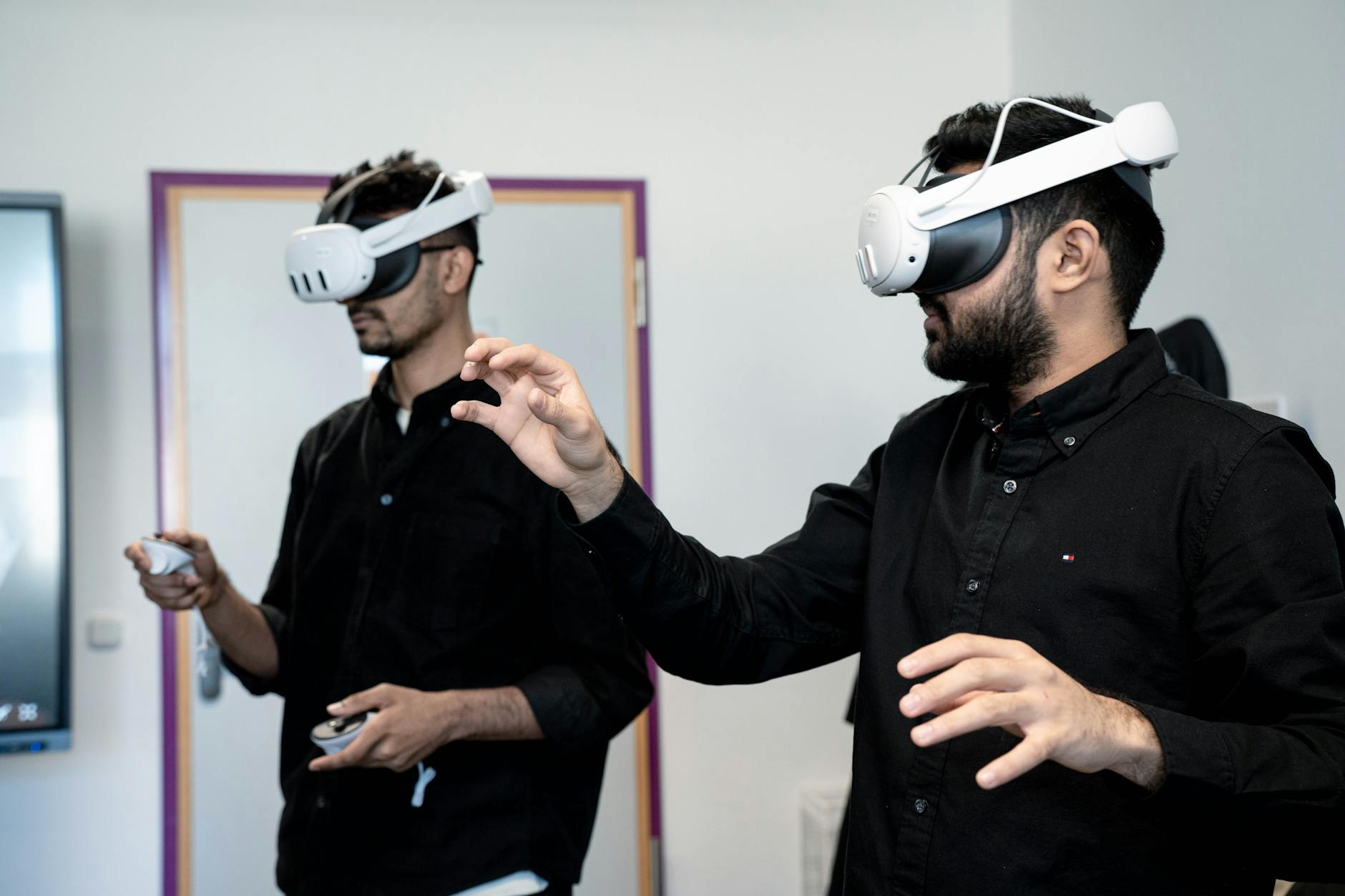
The launch event, attended by industry leaders, researchers, and media, showcased live demonstrations of GPT-5’s ability to analyze complex data, generate high-fidelity images, and engage in natural conversation across multiple languages. OpenAI CEO Sam Altman described GPT-5 as "the most capable and safe AI we have ever built."
Background: The Road to GPT-5
OpenAI has dominated headlines since the release of GPT-3 in 2020, followed by GPT-4 in 2023. Each iteration has brought exponential improvements in language understanding, code generation, and creative tasks, according to Wired. GPT-5’s development began in late 2023, with a focus on overcoming the limitations of previous models.
The company invested heavily in research on multimodal learning, safety alignment, and scalable infrastructure. Partnerships with Microsoft and Nvidia provided the computational resources necessary to train GPT-5 on a dataset reportedly 10 times larger than that used for GPT-4, as detailed by The New York Times.
Key Features and Breakthroughs
GPT-5’s most notable breakthrough is its seamless integration of text, image, and audio inputs and outputs. The model can analyze a photograph, describe its contents in detail, answer questions about it, and even generate related audio commentary, according to OpenAI’s technical blog.

The model’s reasoning abilities have also improved. In benchmark tests, GPT-5 scored 94% on the MMLU (Massive Multitask Language Understanding) benchmark, surpassing GPT-4’s 86%, as reported by The Verge. It demonstrated advanced mathematical problem-solving and logical inference, reducing hallucinations by 60% compared to its predecessor.
Safety remains a core focus. OpenAI implemented a new alignment protocol, dubbed "Guardrails 2.0," which uses reinforcement learning from human feedback (RLHF) and adversarial testing to minimize harmful outputs. Early independent audits by the Center for AI Safety indicate substantial reductions in toxic or biased responses.
Industry and Academic Reactions
Experts across the tech industry have praised GPT-5’s capabilities. Dr. Fei-Fei Li, Stanford AI Lab director, called it "a watershed moment for multimodal AI," according to CNBC. However, some researchers urge caution, emphasizing the need for ongoing monitoring of real-world impacts.
Major tech firms, including Microsoft and Google, announced plans to integrate GPT-5 into their cloud and productivity platforms. Microsoft confirmed that Copilot, its AI assistant, will be upgraded with GPT-5’s reasoning engine, enhancing enterprise productivity tools.
Societal and Economic Impact

The release of GPT-5 is expected to accelerate AI adoption across industries. Healthcare providers anticipate improvements in diagnostic support and patient communication. Financial institutions are exploring GPT-5 for fraud detection and automated analysis, according to The Wall Street Journal.
Concerns about job displacement and ethical use remain. Labor unions and advocacy groups have called for transparent usage policies and regulatory oversight. OpenAI responded by publishing a detailed usage policy and launching an AI ethics advisory board.
What’s Next for AI?
OpenAI plans to release GPT-5 APIs to developers in April 2026, with general availability scheduled for June. The company is also collaborating with international regulators to ensure responsible deployment, according to Reuters.
Researchers are already speculating about the next frontier: integrating real-time learning and memory into AI models. OpenAI hinted at ongoing research in this area, suggesting that future models may achieve even greater autonomy and adaptability.
Sources: Reuters, The Verge, Wired, The New York Times, OpenAI Blog, CNBC, The Wall Street Journal.
Sources: Information sourced from Reuters, The Verge, Wired, The New York Times, OpenAI Blog, CNBC, and The Wall Street Journal.