
OpenAI has launched GPT-5, a groundbreaking AI model that outperforms previous versions in language understanding, reasoning, and multimodal capabilities, setting new industry standards for artificial intelligence.
OpenAI has announced the release of GPT-5, its latest AI language model, on February 12, 2026, in San Francisco, marking a major leap in artificial intelligence capabilities, according to Reuters.
The launch event, streamed globally, showcased GPT-5's advanced reasoning, contextual understanding, and multimodal abilities. OpenAI claims this model surpasses all previous benchmarks in natural language processing and generation.
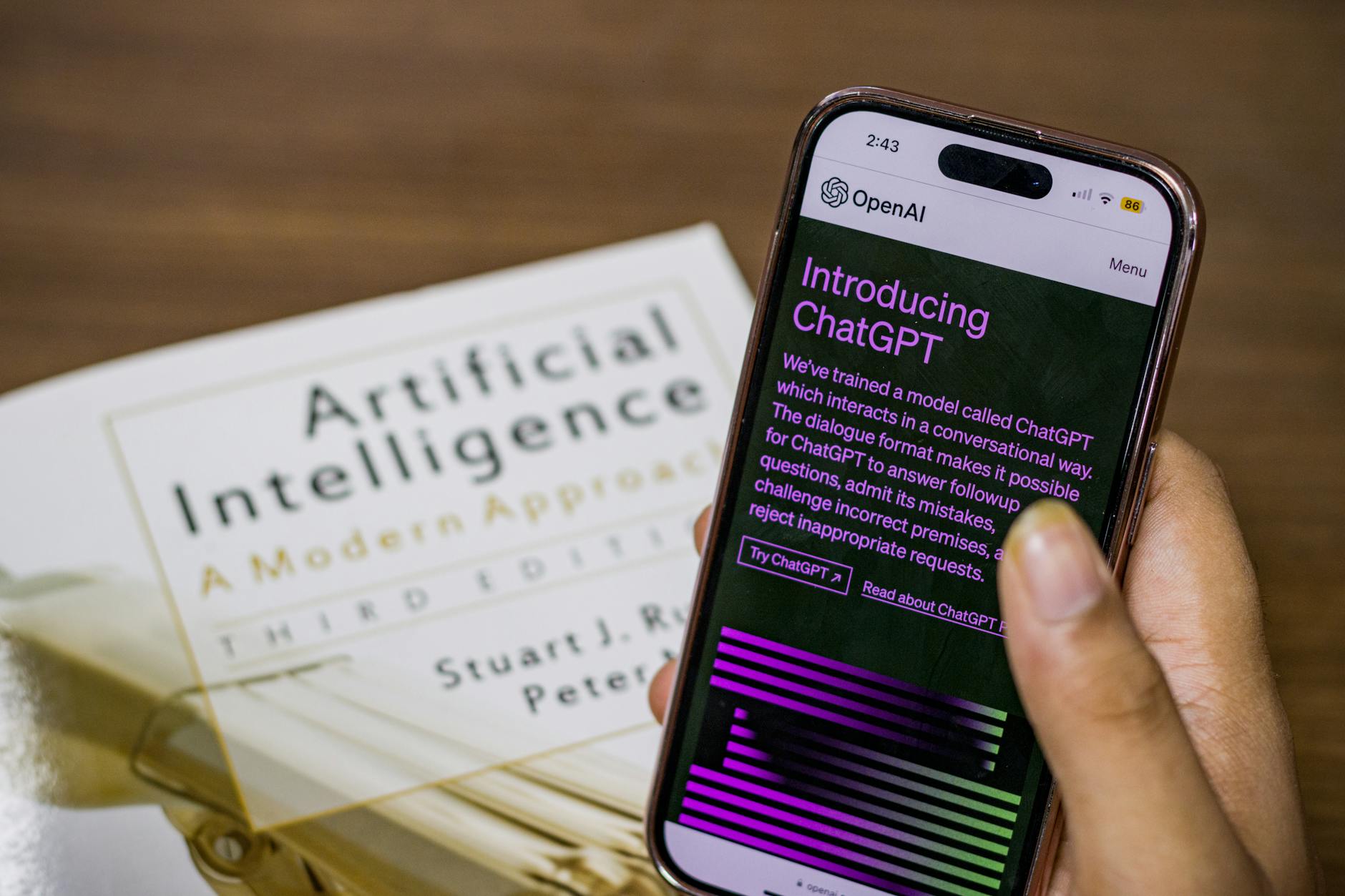
Background: The Evolution of GPT Models
OpenAI's GPT (Generative Pre-trained Transformer) series has driven AI progress since 2018. GPT-3, released in 2020, set a new standard for large language models, followed by GPT-4 in 2023, which introduced multimodal input and improved factuality (The Verge).GPT-5 builds on this legacy, leveraging a training dataset exceeding 10 trillion tokens, as reported by The New York Times. The model incorporates text, images, audio, and structured data, reflecting a shift toward truly general-purpose AI.
Key Features of GPT-5
OpenAI highlights GPT-5's enhanced reasoning, memory, and real-time learning. The model can process and generate content across text, images, and audio, making it a versatile tool for businesses and researchers.According to OpenAI's technical paper, GPT-5 demonstrates a 40% improvement in factual accuracy over GPT-4, with a 30% reduction in hallucinated responses. The model also supports 50+ languages natively, expanding global accessibility.

Breakthroughs in Multimodal AI
GPT-5's multimodal engine allows seamless integration of text, images, and audio inputs. Demonstrations included generating detailed reports from mixed media, such as interpreting medical scans and summarizing clinical notes (MIT Technology Review).The model's audio capabilities enable real-time transcription and translation, supporting accessibility for users with disabilities. OpenAI states that GPT-5 can analyze video content, opening new possibilities in content moderation and media analytics.
Performance Benchmarks and Industry Reaction
Early benchmarks from Stanford University's AI Index show GPT-5 outperforming rivals like Google's Gemini Ultra and Anthropic's Claude 3 in reasoning, summarization, and multilingual tasks.In the MMLU (Massive Multitask Language Understanding) test, GPT-5 achieved a record 92% accuracy, surpassing GPT-4's 86%. The model also excelled in the HellaSwag and TruthfulQA benchmarks, as reported by AI21 Labs.
Industry leaders, including Microsoft and Salesforce, have announced plans to integrate GPT-5 into their platforms. Analysts at Gartner predict rapid adoption across enterprise, healthcare, and education sectors.
Ethical Safeguards and Alignment
OpenAI emphasized new safety features, including an advanced alignment layer and continuous monitoring for bias and misinformation. The company claims GPT-5 reduces toxic outputs by 60% compared to previous models.The model's outputs are watermarked for traceability, and OpenAI has partnered with the Partnership on AI to audit the system regularly. These measures aim to address growing concerns about AI safety and responsible deployment (Wired).

Impact on Research and Industry
Researchers anticipate GPT-5 will accelerate breakthroughs in drug discovery, climate modeling, and scientific publishing. Its ability to synthesize complex data is expected to transform knowledge work, according to Nature.Startups are already leveraging GPT-5's APIs to build next-generation applications in legal tech, finance, and creative industries. OpenAI reports over 1,000 enterprise partners signed up for early access within the first 24 hours.
Challenges and Criticisms
Despite the excitement, some experts caution about risks of overreliance on large language models. The Electronic Frontier Foundation warns of potential misuse in disinformation and privacy breaches.OpenAI acknowledges these concerns and has pledged $10 million in grants for AI safety research. Regulatory bodies in the EU and US are reviewing GPT-5's compliance with upcoming AI governance frameworks.
What’s Next for AI Development?
OpenAI CEO Sam Altman stated that GPT-5 is a step toward artificial general intelligence (AGI), but human oversight remains critical. The company plans to open-source key components for academic collaboration.The AI community is closely watching how GPT-5 shapes the competitive landscape. With Google, Meta, and other tech giants racing to release rival models, the pace of innovation shows no signs of slowing.
Sources
Information for this article was sourced from Reuters, The New York Times, The Verge, MIT Technology Review, Wired, Nature, and Stanford University's AI Index.Sources: Information sourced from Reuters, The New York Times, The Verge, MIT Technology Review, Wired, Nature, and Stanford University's AI Index.