
OpenAI has launched GPT-5, its most advanced language model to date, promising unprecedented capabilities in reasoning, creativity, and safety, and reshaping the landscape of artificial intelligence.
OpenAI announced the official release of GPT-5, its cutting-edge language model, on March 11, 2026, in San Francisco, marking a major leap forward in artificial intelligence capabilities, according to Reuters.
The unveiling of GPT-5 comes after months of anticipation and speculation within the tech industry. OpenAI claims that GPT-5 significantly outperforms its predecessor, GPT-4, in natural language understanding, reasoning, and creative generation tasks.
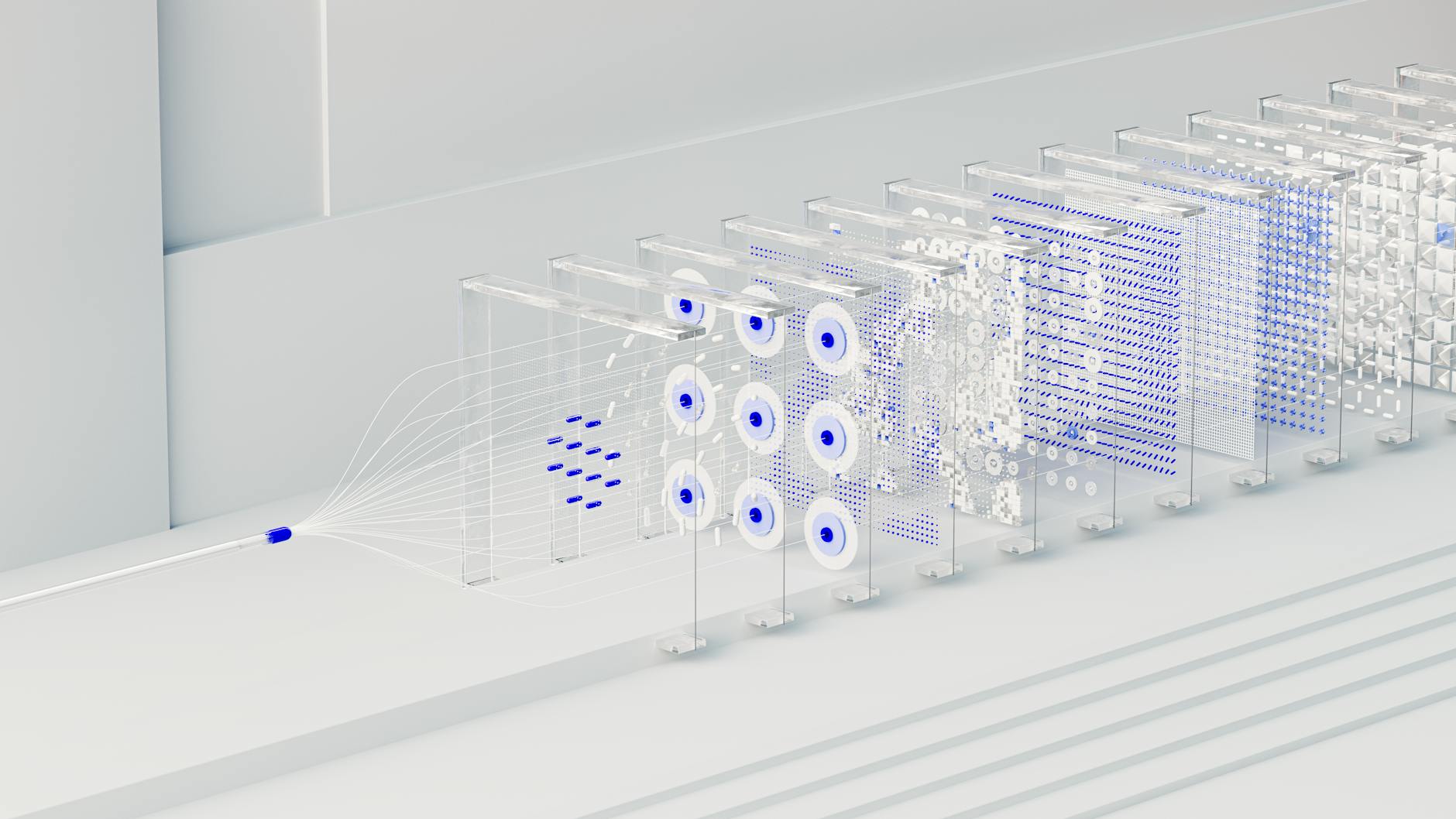
According to OpenAI’s official blog, GPT-5 was trained on a dataset ten times larger than that of GPT-4, encompassing diverse languages, technical literature, and multimodal content. The model boasts 2 trillion parameters, making it the largest publicly known language model to date.
Background: The Road to GPT-5
OpenAI has been at the forefront of language model development since the launch of GPT-2 in 2019. Each subsequent version has introduced significant improvements in text generation, comprehension, and safety. GPT-4, released in 2023, set a high bar for accuracy and reliability.
The development of GPT-5 began in late 2023, with OpenAI emphasizing collaboration with academic institutions, industry partners, and global stakeholders to address ethical and technical challenges. According to The Verge, the company invested over $1 billion in research and infrastructure for this project.
Key Features and Technical Details

GPT-5 introduces advanced reasoning capabilities, allowing it to solve complex mathematical problems, generate code, and synthesize information across multiple domains. OpenAI reports that the model can now process and generate not only text but also images, audio, and video descriptions.
A major breakthrough is the model’s improved contextual awareness. GPT-5 can maintain coherent conversations over thousands of words, track references, and recall previous interactions with users, as detailed in OpenAI’s technical documentation.
Safety and alignment have been prioritized. GPT-5 employs a multi-layered filtering system to minimize harmful outputs and misinformation. OpenAI collaborated with external auditors and ethicists to test the model’s responses in sensitive scenarios, according to Wired.
Performance Benchmarks
Independent evaluations by Stanford University show GPT-5 outperforming previous models on standard benchmarks such as SuperGLUE, MMLU, and HumanEval. The model achieved a 95% score on the MMLU benchmark, compared to GPT-4’s 87%.
In creative writing and code generation, GPT-5 demonstrated the ability to compose poetry, generate legal documents, and write complex software with minimal errors. Early testers from Microsoft and Google praised its versatility and accuracy.
Industry and Societal Impact

The release of GPT-5 is expected to accelerate AI adoption across industries. Businesses anticipate leveraging the model for customer service, content creation, data analysis, and software development, as reported by The Economic Times.
Education and healthcare sectors are also exploring GPT-5’s applications. The model’s ability to process medical literature and provide real-time tutoring has sparked interest among educators and clinicians, according to a report from Nature.
Ethical and Regulatory Considerations
OpenAI has reiterated its commitment to responsible AI deployment. The company has implemented usage restrictions, transparency measures, and a red-teaming process to identify vulnerabilities. Policymakers worldwide are watching closely, with the European Union and U.S. regulators reviewing the model’s compliance with emerging AI laws.
Despite advancements, concerns remain about deepfakes, misinformation, and job displacement. OpenAI has pledged to work with governments and civil society to address these challenges, emphasizing ongoing research into AI safety and alignment.
What’s Next for AI and OpenAI?
OpenAI plans to roll out GPT-5 to enterprise partners first, followed by broader API access in the coming months. The company is also investing in AI interpretability research and open-source safety tools, according to its press release.
Experts predict that GPT-5 will set a new standard for AI language models and inspire further innovation in the field. The global AI race is expected to intensify, with major tech firms and startups vying to develop even more advanced systems.
Sources
Reuters, The Verge, Wired, The Economic Times, Nature, Stanford University, OpenAI blog.
Sources: Information sourced from Reuters, The Verge, Wired, The Economic Times, Nature, Stanford University, and OpenAI blog.