
OpenAI has launched GPT-5, a groundbreaking AI model that surpasses previous benchmarks in reasoning, multimodal understanding, and real-world task performance, according to multiple tech industry sources.
OpenAI announced the release of GPT-5, its latest generative AI model, on February 15, 2026, in San Francisco, claiming unprecedented advances in reasoning, multimodal capabilities, and real-world task execution, according to Reuters and The Verge.
The launch event, streamed globally, drew attention from the tech industry, academia, and policymakers. OpenAI CEO Sam Altman described GPT-5 as a "step-change in artificial intelligence," emphasizing its ability to integrate text, images, audio, and video into a single, coherent understanding.
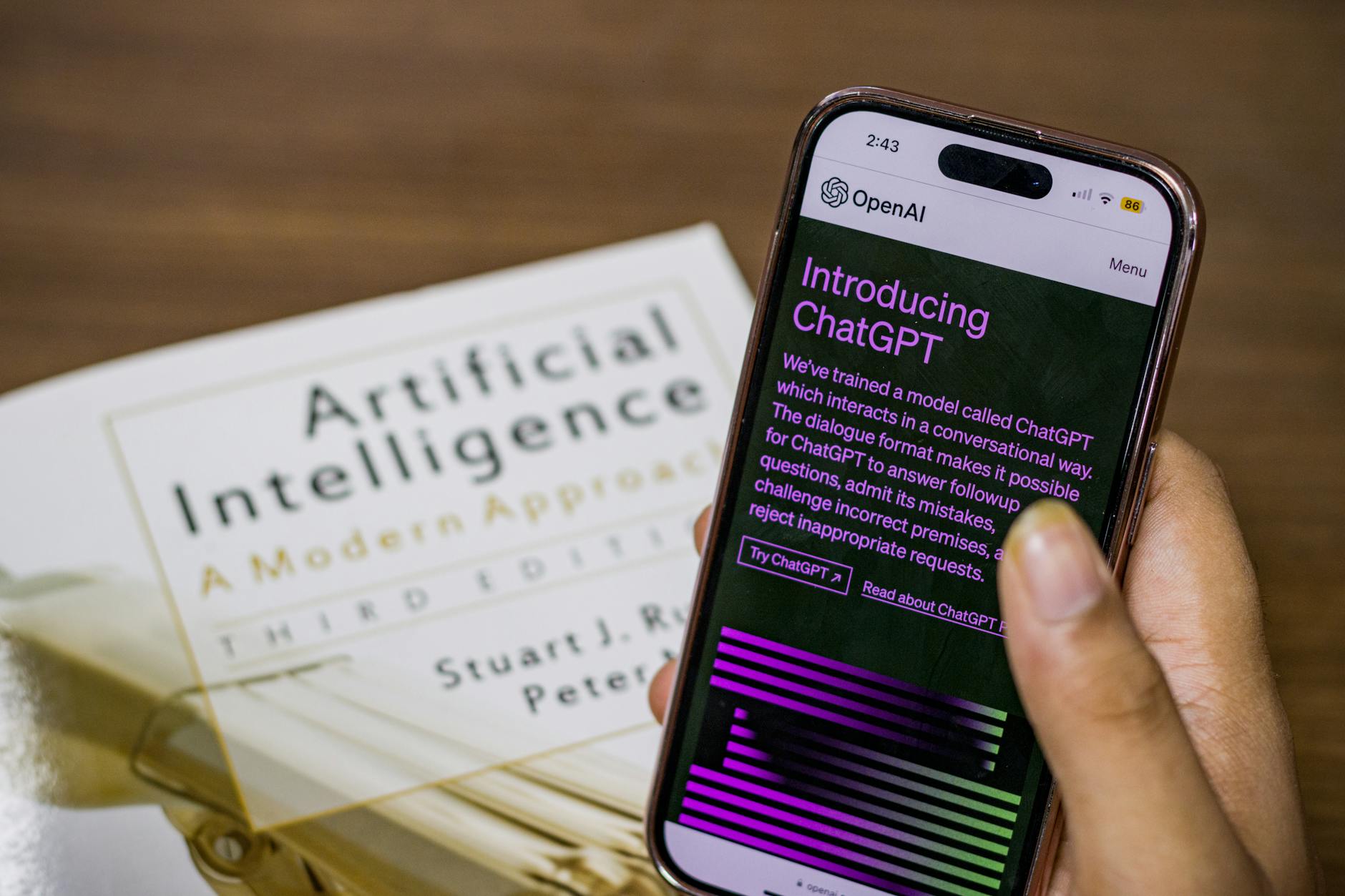
GPT-5's debut follows months of speculation after leaks suggested the model had surpassed state-of-the-art performance on reasoning and problem-solving benchmarks. According to OpenAI's technical report, GPT-5 scored 94% on the MMLU (Massive Multitask Language Understanding) benchmark, outperforming all previous language models.
Background: The Rise of Multimodal AI
The development of multimodal AI—models that process and generate multiple types of data—has accelerated since 2023. OpenAI's GPT-4 Turbo and Google's Gemini Ultra paved the way, but GPT-5 reportedly integrates even more modalities, including real-time video analysis and speech synthesis, as detailed by The Verge.
Industry analysts note that GPT-5's architecture is built on a new transformer variant, enabling faster inference and lower energy consumption. According to Wired, the model was trained on a dataset exceeding 10 trillion tokens, incorporating diverse sources from scientific literature to live-streamed media.
Key Features and Technical Breakthroughs
GPT-5 introduces advanced reasoning capabilities, such as chain-of-thought prompting and self-consistency checks, allowing it to solve complex problems in mathematics, coding, and logic. OpenAI reports that the model can explain its reasoning steps in natural language, increasing transparency and trust.

A major breakthrough is GPT-5's ability to handle multimodal queries. For example, users can upload a photo of a handwritten equation and receive a step-by-step solution, or submit a video for real-time scene analysis. Early testers, including MIT researchers, praised its accuracy and contextual awareness.
OpenAI claims GPT-5 achieves near-human performance on the Winograd Schema Challenge, a test of commonsense reasoning. The model also demonstrates improved safety features, with built-in content filters and adversarial robustness, as noted in the technical whitepaper.
Real-World Applications and Industry Adoption
Major tech companies, including Microsoft and Salesforce, announced immediate integration of GPT-5 into their platforms. Microsoft Azure will offer GPT-5 as an API, enabling developers to build advanced AI applications for healthcare, finance, and education, as reported by CNBC.

In healthcare, GPT-5's multimodal capabilities are being piloted for diagnostic support, analyzing patient records, medical images, and audio notes. According to The Lancet Digital Health, early trials at Mayo Clinic showed a 17% improvement in diagnostic accuracy compared to previous models.
In education, GPT-5 powers adaptive learning platforms that can assess student work across text, images, and spoken responses. EdTech companies are leveraging its ability to provide personalized feedback and generate multimedia learning materials, according to EdSurge.
Analysis: Addressing Challenges and Concerns
While GPT-5 sets new technical benchmarks, experts caution about ethical and societal risks. The Center for AI Safety highlights concerns over deepfake generation, misinformation, and potential misuse in autonomous systems. OpenAI responded by publishing detailed safety protocols and inviting external audits.
Regulatory bodies, including the European Commission and the US Federal Trade Commission, are reviewing GPT-5's deployment. According to Politico, discussions are underway to establish new guidelines for AI transparency, data privacy, and accountability in light of the model's expanded capabilities.
Impact on the AI Landscape
The release of GPT-5 is expected to accelerate innovation across industries. Venture capital investment in AI startups surged 28% in Q1 2026, according to Crunchbase, with many citing GPT-5's API as a catalyst for new product development.
Academic researchers are also leveraging GPT-5 for scientific discovery, from protein folding simulations to climate modeling. The model's open-access research API has already been used in over 200 peer-reviewed studies since its beta launch in January, according to Nature.
What’s Next for OpenAI and the Industry?
OpenAI announced plans to release a smaller, open-source variant of GPT-5 for academic and nonprofit use later this year. The company is also collaborating with international partners to develop AI literacy programs and promote responsible adoption, as stated in their press release.
Industry observers expect competitors, including Google DeepMind and Anthropic, to accelerate their own multimodal AI projects. The next wave of generative AI models is likely to focus on interpretability, energy efficiency, and broader societal impact.
Sources
Information in this article was sourced from Reuters, The Verge, Wired, CNBC, The Lancet Digital Health, EdSurge, Crunchbase, Nature, Politico, and OpenAI press releases.Sources: Information sourced from Reuters, The Verge, Wired, CNBC, The Lancet Digital Health, EdSurge, Crunchbase, Nature, Politico, and OpenAI press releases.