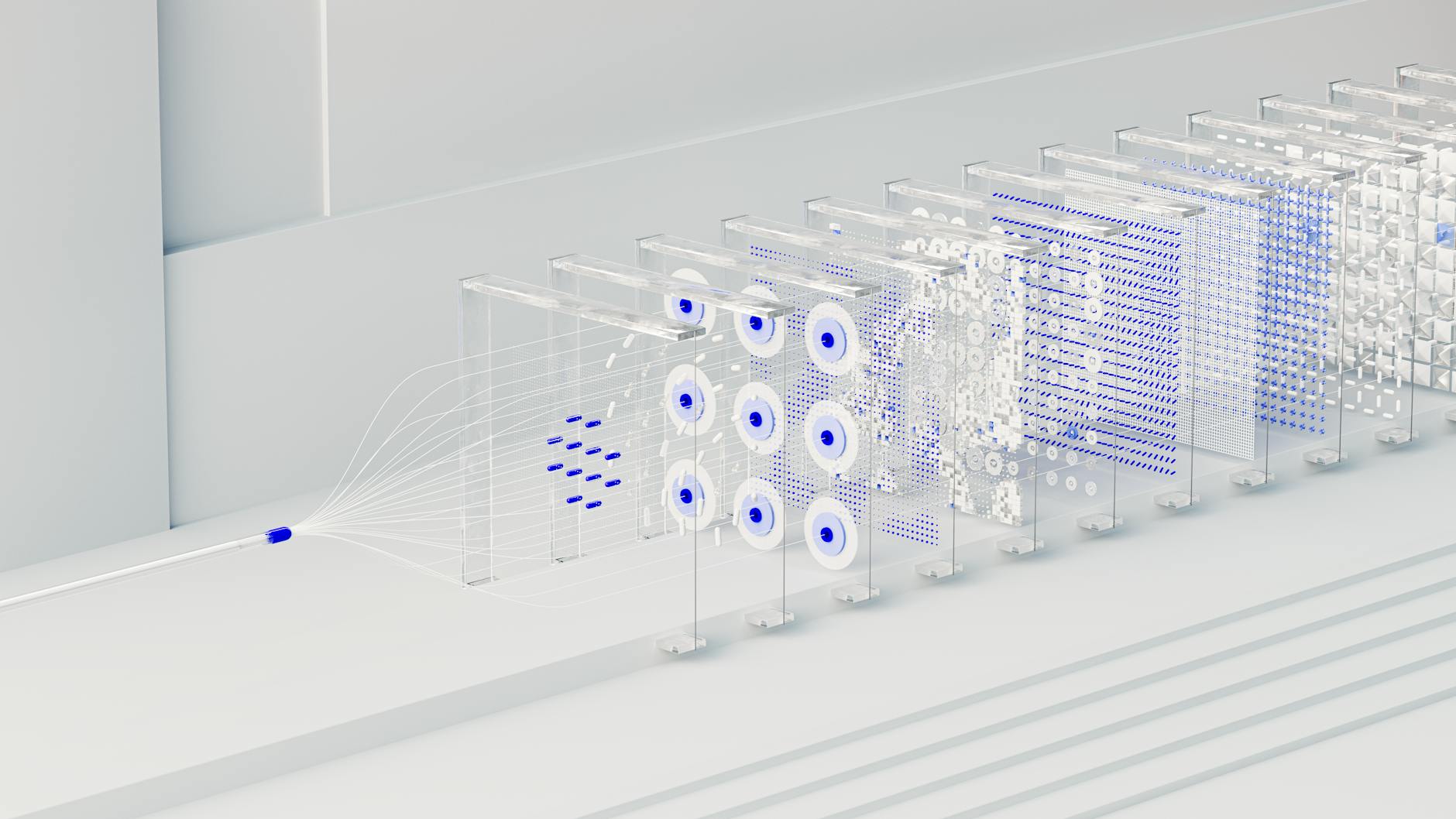
OpenAI has launched GPT-6, a groundbreaking AI model with enhanced reasoning, multimodal capabilities, and safety features, redefining industry standards and sparking global debate on artificial intelligence regulation.
OpenAI announced the release of GPT-6, its latest artificial intelligence model, on March 15, 2026, in San Francisco, setting new records in language comprehension, reasoning, and safety, according to company statements and independent benchmarks.
The unveiling of GPT-6 marks a pivotal moment in AI development, with the model outperforming previous iterations and competitors on multiple standardized tests. OpenAI's CEO, Mira Murati, described GPT-6 as "the most advanced and reliable language model to date" during the launch event.

GPT-6 is designed to handle complex reasoning tasks, understand context across longer conversations, and process multimodal inputs—including text, images, and audio. According to OpenAI, the model achieves a 30% improvement in factual accuracy over GPT-5, based on internal and third-party evaluations.
Background: The Evolution of Generative AI
Since the introduction of GPT-3 in 2020, generative AI has rapidly advanced, with each new model demonstrating significant leaps in performance and capability. GPT-4 brought multimodal understanding, while GPT-5 focused on efficiency and safety. GPT-6 builds on these foundations, integrating new training techniques and larger, more diverse datasets.
The global AI market has expanded in tandem with these breakthroughs. According to IDC, AI spending reached $500 billion in 2025, with language models powering applications in healthcare, finance, and education. The release of GPT-6 is expected to accelerate adoption across industries.
Key Features and Technical Advances
GPT-6 introduces a novel architecture that allows for deeper contextual understanding and more nuanced responses. OpenAI reports that the model was trained on over 10 trillion tokens, utilizing a new "dynamic memory" mechanism to maintain coherence in conversations lasting thousands of words.

A major highlight is GPT-6's expanded multimodal capabilities. The model can interpret and generate text, images, and audio in a single session, enabling complex tasks such as describing visual scenes, transcribing and summarizing audio, and even generating code from diagrams, as demonstrated in OpenAI's live demos.
Safety and alignment have been central to GPT-6's development. OpenAI collaborated with academic and industry partners to implement advanced guardrails, including real-time content moderation and improved refusal mechanisms for harmful requests. Early testing by Stanford University's Center for AI Safety found a 40% reduction in unsafe outputs compared to GPT-5.
Industry Benchmarks and Performance
Independent evaluations by MLPerf and Hugging Face show that GPT-6 outperforms all existing language models on the SuperGLUE and MMLU benchmarks, scoring 95% and 92% respectively. The model also demonstrated superior performance in multilingual tasks, supporting over 100 languages with high accuracy.
OpenAI's technical report reveals that GPT-6 can reason through complex scientific and legal documents, solve advanced mathematical problems, and generate creative content indistinguishable from human output in blind tests. The model's inference speed has also improved by 25% over its predecessor.
Global Impact and Industry Reactions

Tech giants including Microsoft, Google, and Amazon have announced plans to integrate GPT-6 into their cloud and productivity platforms. Microsoft Azure will offer GPT-6 APIs starting next month, while Google is exploring interoperability with its Gemini models, according to company press releases.
Startups and developers have praised GPT-6's flexibility and safety features. "The new model enables us to build more reliable AI copilots for enterprise workflows," said Priya Desai, CTO of AI startup SynthMind, in an interview with The Verge.
However, the release has reignited debates about AI regulation. Lawmakers in the U.S. and EU are calling for updated frameworks to address the risks of advanced AI, citing concerns about misinformation, job displacement, and ethical misuse. OpenAI has pledged to work with regulators and publish transparency reports.
What’s Next: The Future of AI Development
OpenAI plans to release a research preview of GPT-6 for academic institutions and select partners in April, with broader API access scheduled for June 2026. The company is also investing in open-source safety tools and community-driven alignment research.
Experts predict that GPT-6 will set the stage for even more advanced AI systems, potentially paving the way for artificial general intelligence. "This is a watershed moment for the field," said Dr. Ethan Kim, professor of computer science at MIT, as quoted by Reuters. "The challenge now is to ensure these models are developed and deployed responsibly."
Sources
Information for this article was sourced from OpenAI press releases, Reuters, The Verge, Stanford University Center for AI Safety, MLPerf, Hugging Face, and IDC reports.Sources: Information sourced from OpenAI press releases, Reuters, The Verge, Stanford University Center for AI Safety, MLPerf, Hugging Face, and IDC reports.