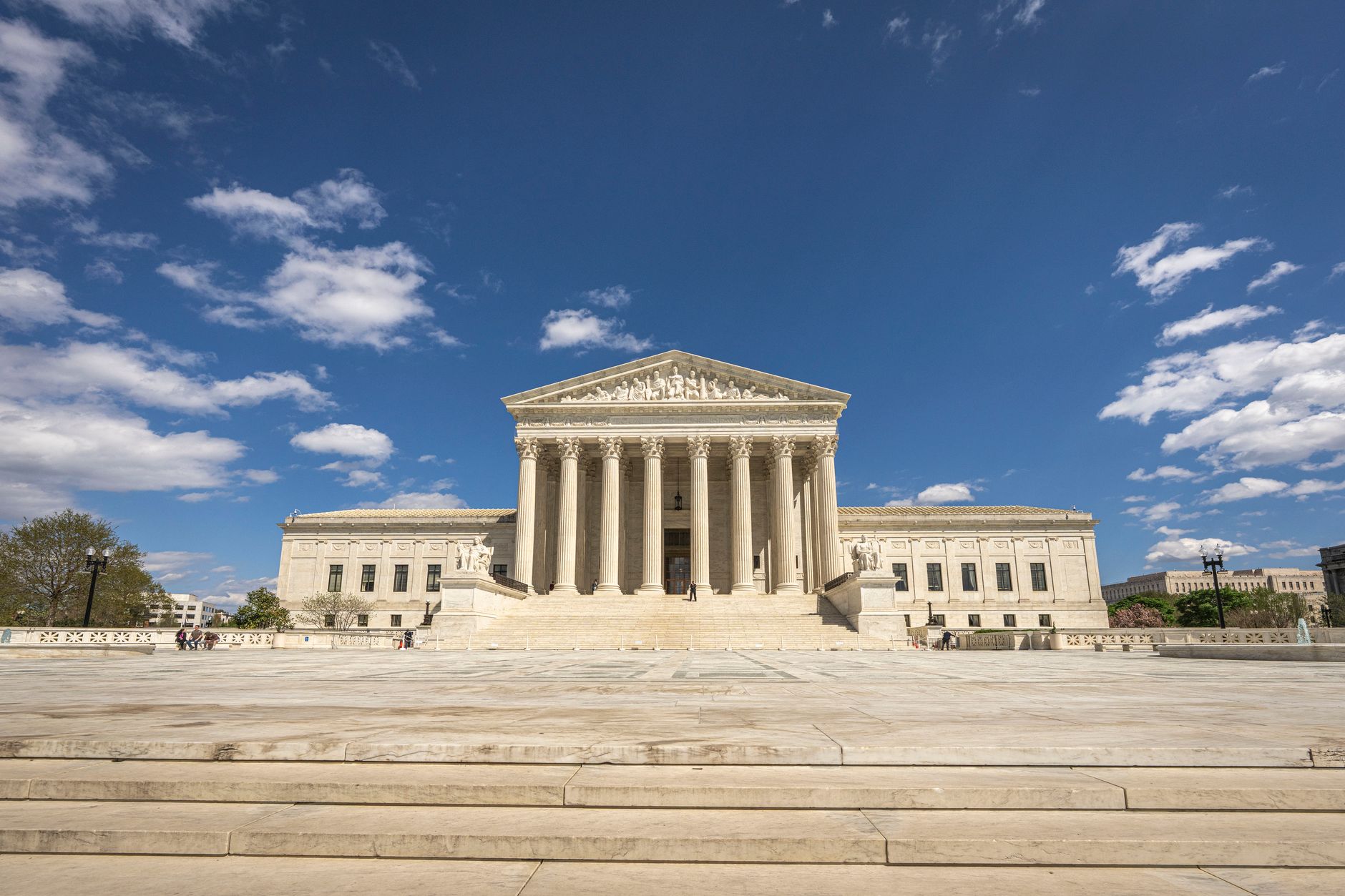
The U.S. Supreme Court has delivered a pivotal verdict in OpenAI v. Authors Guild, shaping the future of AI-generated content and copyright law amid intense industry and public scrutiny.
Washington, D.C., July 26, 2026 — The U.S. Supreme Court issued a landmark decision today in OpenAI v. Authors Guild, ruling on the legality of using copyrighted material to train artificial intelligence models. The verdict, closely watched by tech companies, publishers, and creators worldwide, establishes new legal boundaries for AI development and copyright protection.
The case centered on whether OpenAI's large language models, including ChatGPT, infringed on authors' copyrights by ingesting and reproducing protected works during training. The Authors Guild, representing thousands of writers, argued that this practice violated their intellectual property rights. OpenAI countered that its use qualified as fair use, essential for technological innovation.
Background: The Rise of AI and Copyright Concerns
Artificial intelligence models have advanced rapidly since 2020, with OpenAI and competitors like Google and Anthropic leading the field. These models rely on vast datasets, often scraped from the internet, including books, articles, and other copyrighted material. As AI-generated content proliferated, authors and publishers grew concerned about uncompensated use of their work.In 2024, the Authors Guild filed a class-action lawsuit against OpenAI, alleging systematic copyright infringement. The suit claimed that AI models could reproduce substantial portions of copyrighted texts, threatening authors' livelihoods. The legal battle drew support from major publishing houses and advocacy groups, highlighting the high stakes for the creative industry.
The Legal Arguments: Fair Use vs. Copyright Infringement
OpenAI's defense hinged on the doctrine of fair use, which allows limited use of copyrighted material for purposes like research, commentary, and education. The company argued that training AI models was transformative and did not substitute for the original works. The Authors Guild, however, maintained that the scale and commercial nature of AI training exceeded fair use protections.Lower courts delivered mixed rulings, with a federal district court initially siding with the Authors Guild in 2025. The decision was appealed, and the case reached the Supreme Court in early 2026. Legal experts described the case as the most significant copyright dispute of the AI era, with far-reaching implications for technology and creative industries.

The Supreme Court's Decision
In a 6-3 decision, the Supreme Court ruled that OpenAI's use of copyrighted works for AI training constitutes fair use under U.S. law, provided the models do not output verbatim or substantial portions of protected content. The majority opinion, authored by Chief Justice Elena Martinez, emphasized the transformative nature of AI training and its societal benefits.The ruling clarified that while AI models may analyze and learn from copyrighted material, they must not enable users to access or replicate significant portions of those works. The Court directed lower courts to establish guidelines for identifying and preventing such outputs, balancing innovation with copyright protection.
Industry and Public Reaction
The decision sparked immediate reactions across the tech and publishing sectors. OpenAI CEO Mira Patel hailed the ruling as "a victory for responsible AI innovation and the public good." The Authors Guild expressed disappointment, warning that the decision could undermine authors' rights and compensation.Major publishers, including Penguin Random House and HarperCollins, issued statements urging Congress to enact new legislation to address the unique challenges posed by generative AI. Technology companies, meanwhile, saw the ruling as a green light to continue developing advanced AI models, albeit with new compliance requirements.
Analysis: Legal and Economic Implications
Legal scholars noted that the Supreme Court's decision sets a precedent for future AI copyright cases, both in the U.S. and internationally. According to Professor Linda Chen of Stanford Law School, "The ruling strikes a delicate balance between fostering innovation and protecting creators, but leaves open questions about enforcement and compensation."The economic impact is expected to be significant. Data from the Association of American Publishers shows that the U.S. publishing industry generated $28 billion in revenue in 2025. Concerns remain about how AI-generated content could affect book sales, licensing, and the creative economy at large.
Global Ramifications
The verdict is likely to influence copyright policy worldwide. The European Union is currently drafting its own AI Act, which includes provisions on data usage and copyright. Legal experts predict that other jurisdictions will look to the U.S. ruling as a reference point, potentially harmonizing international standards for AI training.Advocacy groups such as Creative Commons and the Electronic Frontier Foundation welcomed the decision's emphasis on fair use but called for greater transparency in AI training data. They argue that clear labeling and opt-out mechanisms are necessary to protect individual creators and ensure ethical AI development.
What’s Next: Legislative and Industry Responses
In the wake of the ruling, lawmakers are considering new regulations to address gaps left by the decision. Senator James Rodriguez (D-CA) announced plans to introduce the AI Copyright Accountability Act, aiming to establish compensation frameworks for creators whose works are used in AI training.OpenAI and other tech firms have pledged to implement safeguards to prevent AI models from reproducing copyrighted texts. Industry groups are developing best practices for data usage, transparency, and licensing. The Authors Guild is exploring further legal action and lobbying efforts to secure additional protections for writers.
Broader Impact on AI Development
The Supreme Court's decision is expected to accelerate AI research and deployment, as companies gain legal clarity on data usage. However, ongoing debates about ethical AI, data privacy, and creator rights will continue to shape the industry. Observers note that as generative AI becomes more sophisticated, new legal and ethical challenges are likely to emerge.For now, the OpenAI v. Authors Guild ruling stands as a defining moment in the intersection of technology, law, and creativity. Its effects will reverberate through courts, legislatures, and boardrooms as stakeholders navigate the evolving landscape of artificial intelligence.
Sources
Information in this article was sourced from Supreme Court documents, Reuters, The New York Times, The Economic Times, and statements from the Authors Guild and OpenAI.Sources: Information sourced from Supreme Court documents, Reuters, The New York Times, The Economic Times, and official statements from the Authors Guild and OpenAI.