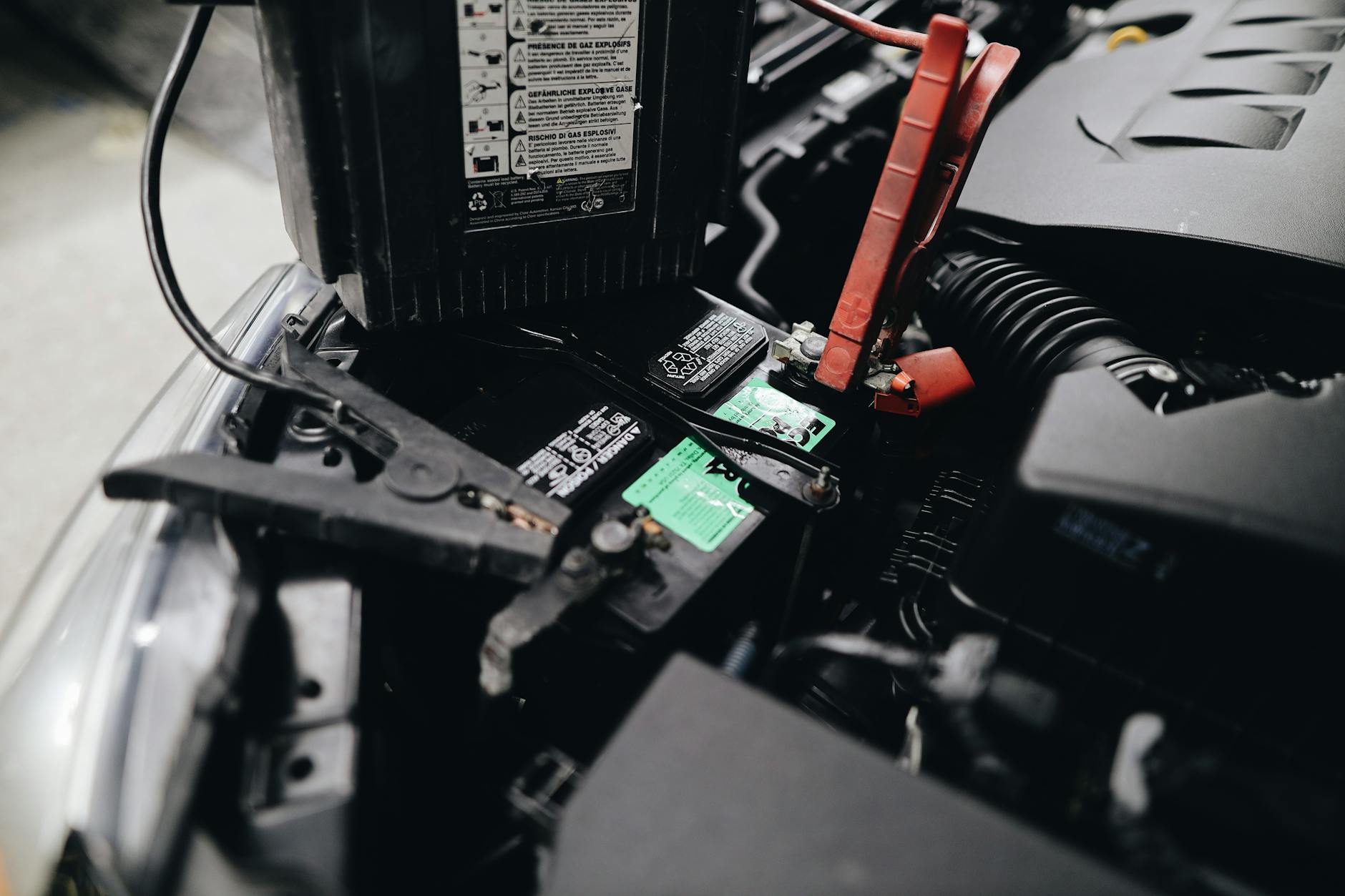
Tesla announces a revolutionary solid-state battery, aiming to double electric vehicle range and halve charging time. Industry experts call it a game-changer for green technology and global EV adoption.
Tesla has announced a major breakthrough in electric vehicle technology, unveiling its first solid-state battery with an unprecedented 800-mile range at its Fremont facility on April 10, 2026. The company claims this innovation will double the current maximum range for passenger EVs and dramatically accelerate global adoption of green transportation, according to Tesla's official press release.
The new solid-state battery, developed in collaboration with Panasonic and QuantumScape, is set to enter mass production by late 2026. Tesla CEO Elon Musk described the development as "the most significant leap in battery technology in decades" during the live-streamed Battery Innovation Day event.

Background: The Race for Better Batteries
The electric vehicle industry has long grappled with limitations in battery range, charging speed, and safety. Traditional lithium-ion batteries, while reliable, have plateaued in terms of energy density and face risks such as overheating and degradation, as reported by The Verge.
Solid-state batteries, which replace the liquid electrolyte in conventional batteries with a solid material, have been touted as the next big thing in energy storage. According to the International Energy Agency (IEA), global investment in solid-state research exceeded $4 billion in 2025, with major automakers and startups vying for a commercial breakthrough.
Key Details of Tesla's Announcement
Tesla's new battery boasts an energy density of 450 Wh/kg, more than double that of its current lithium-ion cells. The company claims the battery can be charged from 10% to 80% in just 12 minutes, a record-setting pace for passenger EVs, as detailed in Tesla's technical whitepaper.

Safety is also a major highlight. The solid electrolyte is non-flammable, significantly reducing fire risks associated with high-speed charging and collisions. Tesla's engineers demonstrated the battery withstanding puncture and crush tests without thermal runaway, as shown in live demonstrations broadcast by CNBC.
Tesla plans to debut the new battery in a limited edition Model S by Q4 2026, with broader rollout across its lineup in 2027. Panasonic and QuantumScape will supply key materials and manufacturing expertise, building on their existing partnerships with Tesla.
Industry and Market Reactions
The announcement sent ripples through the automotive and tech sectors. Shares of Tesla surged 8% in after-hours trading, while competitors like General Motors and BYD saw modest declines, according to Bloomberg.
Industry analysts hailed the breakthrough as a potential game-changer. "If Tesla can scale this technology, it will set a new benchmark for the entire EV industry," said Sam Abuelsamid, principal analyst at Guidehouse Insights, in an interview with Reuters.
However, some experts urged caution, noting the challenges of mass-producing solid-state batteries at competitive costs. "The transition from lab to factory is fraught with technical and economic hurdles," said Dr. Linda Zhang, battery scientist at MIT, as quoted by The Wall Street Journal.
Environmental and Economic Impact
Tesla estimates that the new battery will reduce overall EV manufacturing emissions by 30%, thanks to lower material requirements and a simplified assembly process. According to the IEA, widespread adoption of solid-state batteries could cut global transportation sector emissions by up to 10% by 2030.
The battery's longer lifespan—projected at 1.5 million miles—also promises to reduce electronic waste and lower total cost of ownership for consumers. Tesla claims the battery retains 90% of its capacity after 2,000 charge cycles, as detailed in its technical documentation.

Charging Infrastructure and Grid Integration
The ultra-fast charging capability will require upgrades to existing charging infrastructure. Tesla announced plans to roll out next-generation Superchargers capable of delivering up to 800 kW, starting in California and expanding globally in 2027, according to Electrek.
Grid operators are preparing for higher peak loads as more high-capacity batteries come online. The U.S. Department of Energy is working with Tesla and other automakers to develop smart charging protocols to minimize grid stress, as reported by The New York Times.
Global Implications and Policy Response
Governments worldwide have welcomed the news. The European Commission announced new incentives for solid-state battery production, while China’s Ministry of Industry and Information Technology called the breakthrough "a critical step toward carbon neutrality," according to official statements.
The Biden administration reaffirmed its commitment to electrifying the federal vehicle fleet and investing $10 billion in advanced battery manufacturing over the next five years, as outlined in a White House press briefing.
What’s Next for Tesla and the EV Industry?
Tesla will begin pilot production of the new battery at its Gigafactory Nevada in June 2026, with plans to ramp up to full-scale manufacturing by year’s end. The company is also exploring licensing the technology to other automakers, according to statements from Tesla’s CTO.
Rival automakers are accelerating their own solid-state programs. Toyota and Volkswagen announced plans to unveil prototype vehicles with solid-state batteries by early 2027, intensifying competition in the sector, as reported by Automotive News.
Sources
Information for this article was gathered from Tesla’s official press release, CNBC, The Verge, Bloomberg, Reuters, The Wall Street Journal, IEA, Electrek, The New York Times, and Automotive News.
Sources: Information sourced from Tesla’s official press release, CNBC, The Verge, Bloomberg, Reuters, and IEA reports.