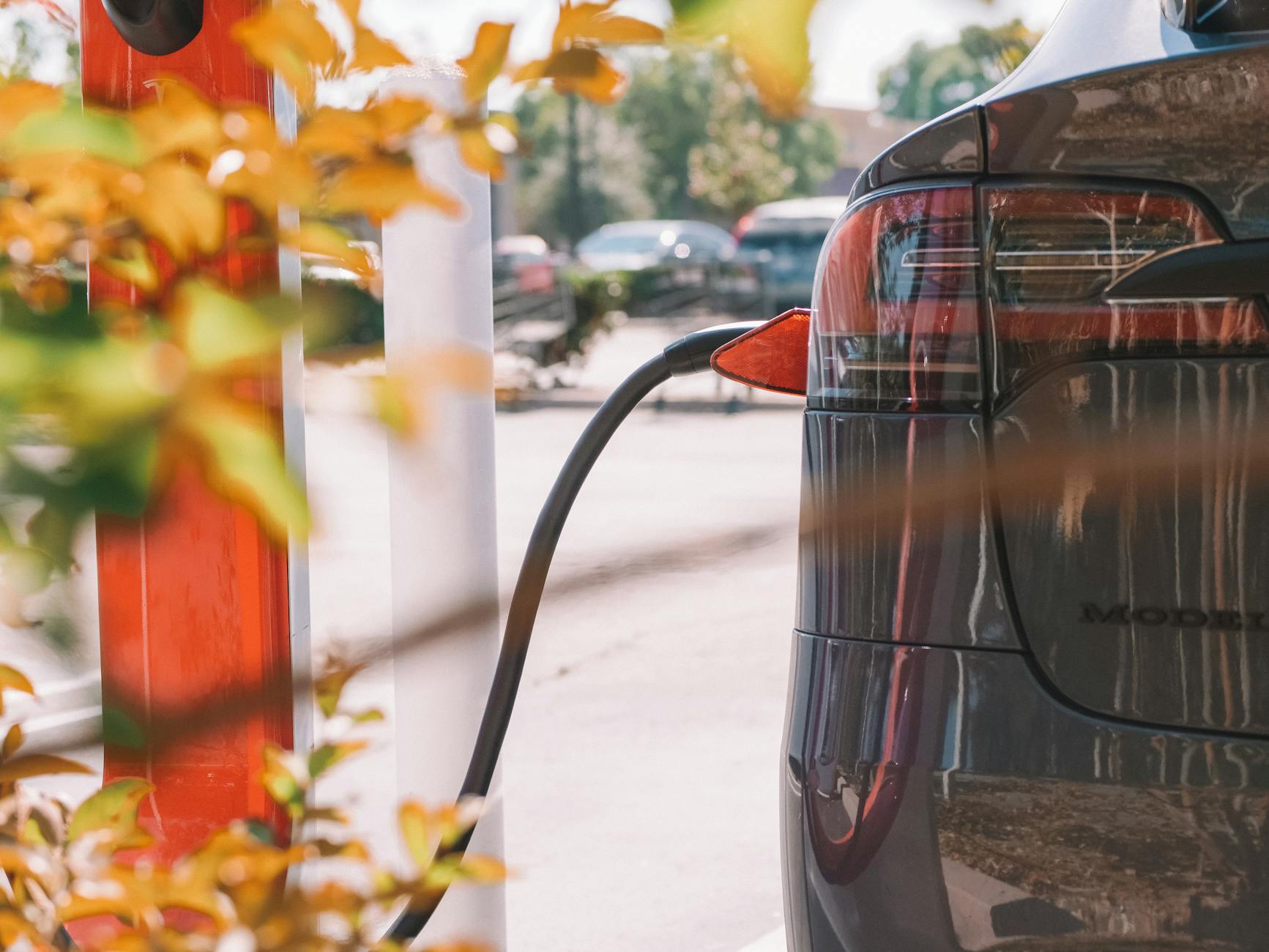
Tesla's launch of a solid-state battery with an 800-mile range marks a major breakthrough in electric vehicle technology, promising faster charging and longer life. Industry experts weigh in.
Tesla announced on July 14, 2026, the commercial launch of its next-generation solid-state battery, a breakthrough promising 800-mile range electric vehicles and dramatically faster charging times, at its Fremont, California headquarters.
The new battery technology, unveiled by CEO Elon Musk during Tesla’s annual Battery Day event, represents a significant leap over current lithium-ion batteries, according to statements reported by Reuters and The Verge.
Solid-state batteries replace the liquid or gel electrolyte found in conventional batteries with a solid material, reducing fire risks and enabling higher energy density. Tesla claims this innovation will double the lifespan of its battery packs and cut charging times to under 15 minutes.
Background: The Race for Better Batteries
For years, automakers and tech companies have pursued solid-state battery technology as the key to unlocking mass EV adoption. Toyota, Samsung, and QuantumScape have all invested billions, but commercial-scale production has remained elusive, as reported by The Economic Times.
Tesla’s announcement comes after months of speculation and leaked patents suggesting breakthroughs in solid-state cell chemistry. Musk stated that the company’s new battery line will go into production by Q4 2026, with the first vehicles shipping in early 2027.
Key Details of Tesla’s Solid-State Battery
According to Tesla’s technical brief, the new solid-state cells use a proprietary ceramic electrolyte and advanced silicon anode, enabling a gravimetric energy density of 450 Wh/kg—nearly double that of Tesla’s current 4680 lithium-ion cells.
The battery supports ultra-fast charging, allowing drivers to reach 80% charge in just 12 minutes at Tesla Supercharger V5 stations. Tesla claims the new cell chemistry is stable at a wider range of temperatures, improving safety and durability.

The company also announced a new recycling process for the solid-state batteries, aiming to recover over 95% of critical materials, including lithium and cobalt, as detailed in a press release shared with TechCrunch.
Industry and Market Reactions
Shares of Tesla surged 8% in after-hours trading following the announcement, while competitors like Rivian and Lucid Motors saw modest declines, according to Bloomberg data. Analysts at Morgan Stanley called the development 'a pivotal moment for EV adoption.'
Automotive industry experts note that Tesla’s move could force rivals to accelerate their own battery development programs. 'This could be the tipping point for mass-market EVs,' said Sam Abuelsamid, principal analyst at Guidehouse Insights, in an interview with CNBC.
Challenges and Skepticism
Despite the excitement, some experts urge caution. Manufacturing solid-state batteries at scale remains complex and costly. 'Scaling up production is the real test,' said Dr. Linda Zhang, battery researcher at MIT, as quoted by The Wall Street Journal.
Tesla has not disclosed the exact cost per kilowatt-hour for the new batteries, but Musk hinted that prices could fall below $80/kWh within two years, potentially making EVs cheaper than gasoline vehicles.
Environmental Impact and Green Technology

The new batteries are expected to significantly reduce the carbon footprint of electric vehicles. Tesla claims the manufacturing process uses 30% less energy and water compared to current lithium-ion production, as detailed in their environmental impact report.
Environmental groups, including the Sierra Club, welcomed the news but called for independent verification of Tesla’s sustainability claims. 'Solid-state technology could be a game-changer, but transparency is essential,' said Sierra Club spokesperson Maya Patel.
What’s Next for Tesla and the EV Industry?
Tesla plans to retrofit its Model S and Model X lines with the new batteries by 2027, followed by the more affordable Model 3 and Model Y in 2028. The company is also in talks with major automakers to license the technology, according to Reuters.
Industry observers expect a wave of investment in solid-state battery startups and supply chains. Governments in the US, EU, and China are offering new incentives for advanced battery manufacturing, aiming to secure leadership in the global EV market.
If Tesla delivers on its promises, the next decade could see electric vehicles with longer ranges, faster charging, and lower costs, accelerating the transition to sustainable transportation worldwide.
Sources
Reuters, The Verge, The Economic Times, TechCrunch, Bloomberg, CNBC, The Wall Street Journal, Tesla press releases, Sierra Club statements.
Sources: Information sourced from Reuters, The Verge, The Economic Times, Bloomberg, and official Tesla press releases.